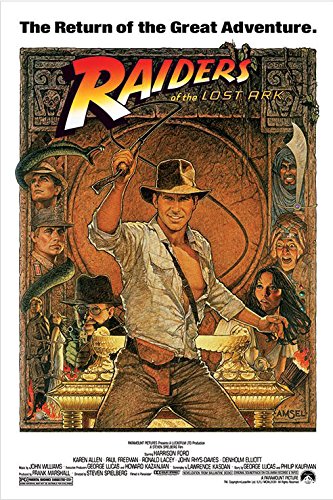
‘The Raiders March’ commonly referred to as the ‘Indiana Jones Theme’, first appeared in the 1981 Steven Spielberg “Indiana Jones: Raiders of the Lost Ark”. This iconic theme was composed by John Williams know for many other famous scores such as ‘The Imperial March’, ‘Hedwig’s Theme’, and ‘E. T.: The Flying Theme’. Williams score for “Indiana Jones: Raiders of the Lost Ark” presents an uplifting and encouraging tune which ties perfectly with the action driven from the protagonist’s adventures. Thomas Elsaesser and Matte Hagener’s text, “Film Theory: An Introduction through the Senses”, explores the idea of cinema as ear. Sounds work simultaneously with the action taking place on the screen by either emphasising the emotion of the story or progression of the action. Elsaesser and Hagener posit that, “Sound moreover serves the image by attaching itself to it mimetically: this can either take the form of typical neo-romantic ‘scores’ which have prevailed in Hollywood since the 1930s and where the emotions that music is meant to bring about in the spectator duplicate the affective states that the narrative is trying to evoke…or of the so-called ‘Micky-mousing,’ in which sound imitates the visual action…” (T. Elsaesser, M. Hagener, 2010, p 138) In the opening of Spielberg’s classic film, the protagonist Indiana Jones, portrayed by Harrison Ford, is being chased by an hostile indigenous tribe after stealing a golden relic from a nearby ruins. With spears being thrown at him and the tribe yelling, Jones grabs a vine and swings into a river where his partner is waiting idly by, fishing off his sea plane. As Jones swings, ‘The Raiders March’ begins to play. The scores upbeat pace, propels the protagonist along, giving the audience the feeling that Jones will escape the danger and succeed. The score matches with the action and progresses it forward. In conclusion, the use of sound within cinema works to connect the audience emotionally with the narrative or mirror the action which can be seen within Spielberg’s “Indiana Jones: Raiders of the Lost Ark”.
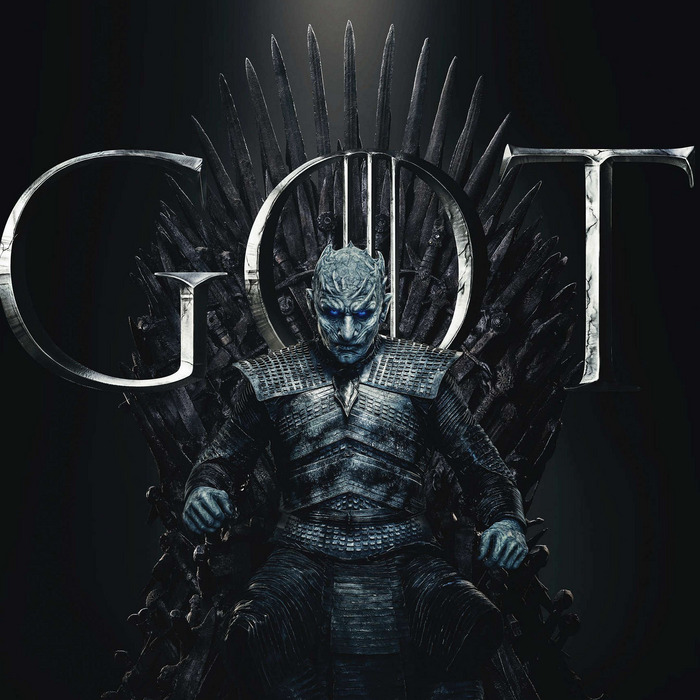
‘Light of the Seven’ soundtrack composed by Ramin Djawadi appeared in the season six finale of HBO’s award winning series ‘Game of Thrones’. The instrumental piece appears at the beginning of the episode and introduced the sound of an organ for the first time in the shows history. The opening scene, stretching over 9 minutes, has very little dialogue drawing attention to the relationship between the score and the action taking place. The composition builds upon the sound as tensions build during the scene. The organ is accompanied by a cello, followed by a solo violin and finally joined by an orchestra of stringed instruments during the climax of the action. As the score builds, so too does the action taking place. ‘Light of the Seven’ acts as non-diegetic sound which embodies classical cinema. Described in Elsaesser and Hagener’s ‘Film Theory: An Introduction through the Senses,” that, “…films made before 1930 were characterized by a great variety of acoustic accompaniments…” (132) Djawadi’s score assists the telling of the narrative and draws an emotional response from the audience. Elsaesser and Hagener continue, stating that, “The relation between the sound and the image also creates a tension: sound and image dance around each other in a perpetual question-and-answer game.” (138) As the opening scene progresses, the action taking place reveals unexpected twists and turns. The score intensifies and softens matching the action, creating a synchronised ‘dance’ which communicates to the audience what’s happening, thus provoking emotional responses and enhanced engagement.
T. Elsaesser, M. Hagener, “Film Theory: An Introduction through the Senses”, 2010, pp 132, 138
Josh Wigler, ‘Game of Thrones composer discusses “Light of the Seven”, the finale’s “Haunting” King’s Landing Score.’ The Hollywood Reporter, June 28, 2016
 Lauren's film analysis