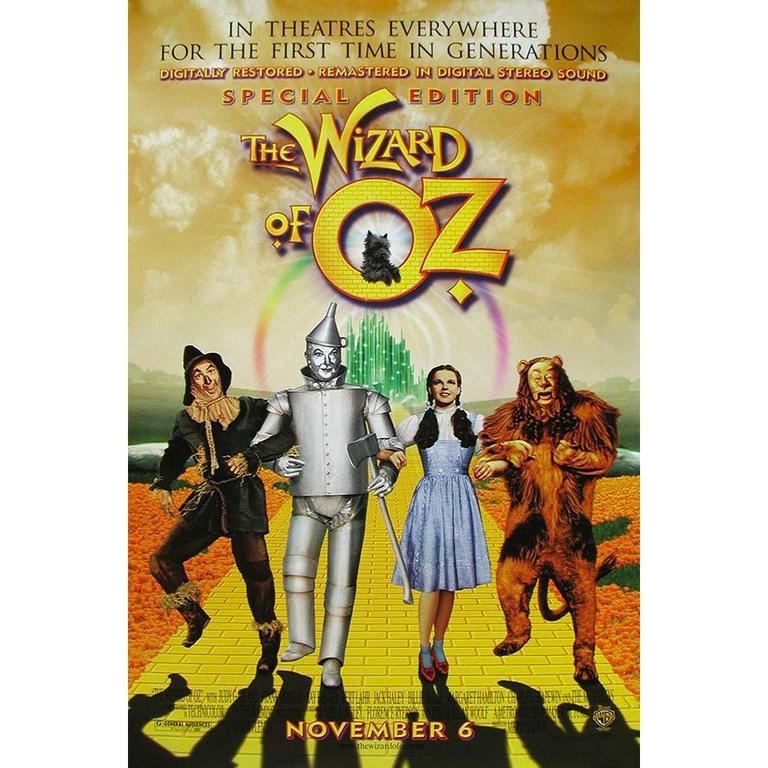
Doors are an incredible motif that are used within cinema, which serve the purpose of allowing the audience to enter into the universe of a film. In the written text, “Film Theory: An Introduction through the Senses” it describes how doors act as a literal and metaphorical transition from the spectator’s world into the narrative’s realm. As an audience we “…always cross a border and enter another world that is different to ours.” (T. Elsaesser, M. Hagener, p 39) By crossing the threshold of the door, the audience can enter and exit from the action taking place both physically and metaphorically. The use of the door actively immerses spectators into the film, making them a participant in the narrative rather than a bystander. This motif is creatively displayed in Victor Fleming, George Cukor, Mervyn LeRoy, King Vidor and Norman Taurog’s 1939 visual masterpiece, ‘The Wizard of Oz’. The audience transitions from the real world into the visual text during the opening sequence, which reveals the black and white world of Kansas. The motif of the door is introduced after the iconic tornado sequence. After being swept up into a powerful twister, while trapped inside her aunty and uncles farm house, Dorthey Gale and her dog Toto land in a whimsical land far from their home back in Kansas. As she stands up and moves over to the door, the camera follows her outside into the colourful and fanciful Oz. The motion of the camera moving inside to the outside transitions the audience into the new dimensions of the changing universe. This concept is achieved with the addition of adding colour to the picture, indicating to audience that the world already established in the opening of the film, has changed into a new and vibrant location. In this scene, the door separates the two universes; the one the audience has been introduced to and the one they manoeuvre into, complimenting Elsaesser and Hagener’s theory.
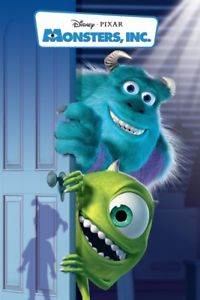
Doors are utilised as a common motif within film narratives. The use of a door allows the spectator to transition from one place to another along with characters within a film. As the characters move through a door, over a threshold, and exists out the other side, the viewer follows along the same path. In the written text, “Film Theory: An Introduction through the Senses”, authors Thomas Elsaesser and Matte Hagener explore how animated film “Monsters, Inc.” employs the use of doors as a means of transitioning. They depict that, “…the animated film Monsters, Inc. deploys the concept of the door as a zone of transition…” (T. Elsaesser, M. Hagener, 2010, p 51) Pete Docter’s 2001 animated Disney film, “Monsters, Inc.” uses doors as a means to transport the scare monsters working at Monsters, Inc. into the rooms of children for the purpose of collecting their screams which they use as a source of energy. Every individual door that’s opened transports the character into a new world and new location. One would open into a room in Paris, while another would lead to the Himalayas. Each door had an exterior that would match the colour scheme inside its room. The character Boo, has a door that is painted white with pink flowers. This matched the childlike nature of both her and the room inside where Boo had her toys, drawings, and large bed. The emersion from the established world which “Monsters, Inc.” takes place, through to a new unexplored reality, transitions the spectator from something familiar, to something unknown. This captivates the viewer as they accompany the character as they make their way through each door. Therefore, Pete Docter captures the cinematic theory of door, through the transitional use of doors within his animated film “Monsters, Inc.”
T. Elsaesser, M. Hagener, “Film Theory: An Introduction through the Senses”, 2010, pp. 39, 51
 Lauren's film analysis