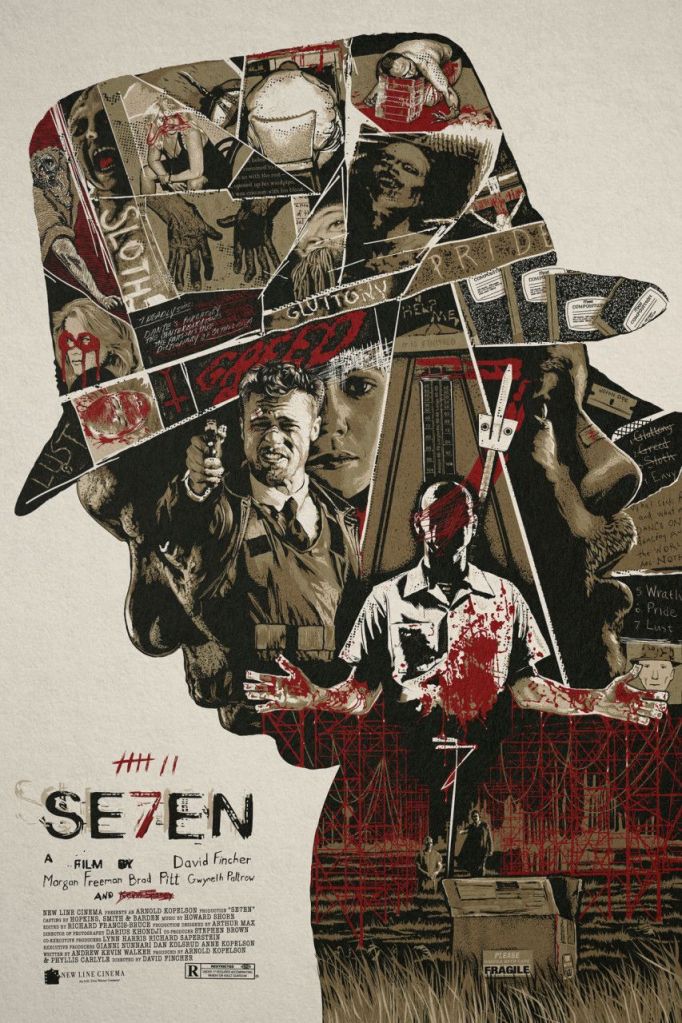
Thomas Elsaesser “Mind Game Films” investigates how puzzles are integrated within cinema as a means of entertainment for spectators. Puzzle films are held in great esteem within cinema as the narrative provides twists and turns that shock viewers, leaving a lasting impression after the first viewing. Elsaesser states, “there are films in which a character is being played games with, without knowing it or without knowing who it is that is playing these (often very cruel and even deadly) games with him (or her).” (Elsaesser, p. 14) This type of puzzle narrative usually reveals the game and the motive behind it in the finale sequences of a film. David Fincher’s 1995 mind-game film, “Se7en”, explores the idea of characters within the narrative being forced into games. The overarching theme within this film looks at the seven deadly sins. Each sin is represented through a murder victim who suffered through tailored torture methods conducted by John Doe. The identity of John Doe remains a mystery for the majority of the narrative, leaving the audience and protagonists David Mills (Brad Pitt) and Detective Somerset (Morgan Freeman) questioning every detail being presented. Fincher, known for his narrative twists, emphasises the concept of puzzle film during the conclusion of “Se7en”. After five of the predicted seven victims had been found, John Doe, revealed as Kevin Spacey, turned himself in. David Mills who’s obsession to find the murder has driven the progression of the narrative, comes to an abrupt end when the John Doe is standing right in front of him, taking away the glory in the capture and arrest. Spacey’s character explains that he will take both Mills and Somerset to the final two victims on the condition that they go alone. After agreeing to his terms, the three drive to an open stretch. They exit the car and wait for a delivery van to drop off a package for Mills. The mystery package is revealed to be the head of Mills’ wife, murdered by John Doe as a ploy to make Mills so angry that he will kill him. The puzzle narrative element is exposed when John Doe is revealed as the personification of envy, after exposing his admiration for Mills and the life he leads, and Mills personifies wrath after murdering John Doe in a fit of rage. Fincher unveils that David Mills has been a vital part of the game without his knowledge, until the very end of the film. Therefore, “Se7en” utilises the concept of puzzle narrative through the plot twist involving the protagonist in the conclusion of the film.
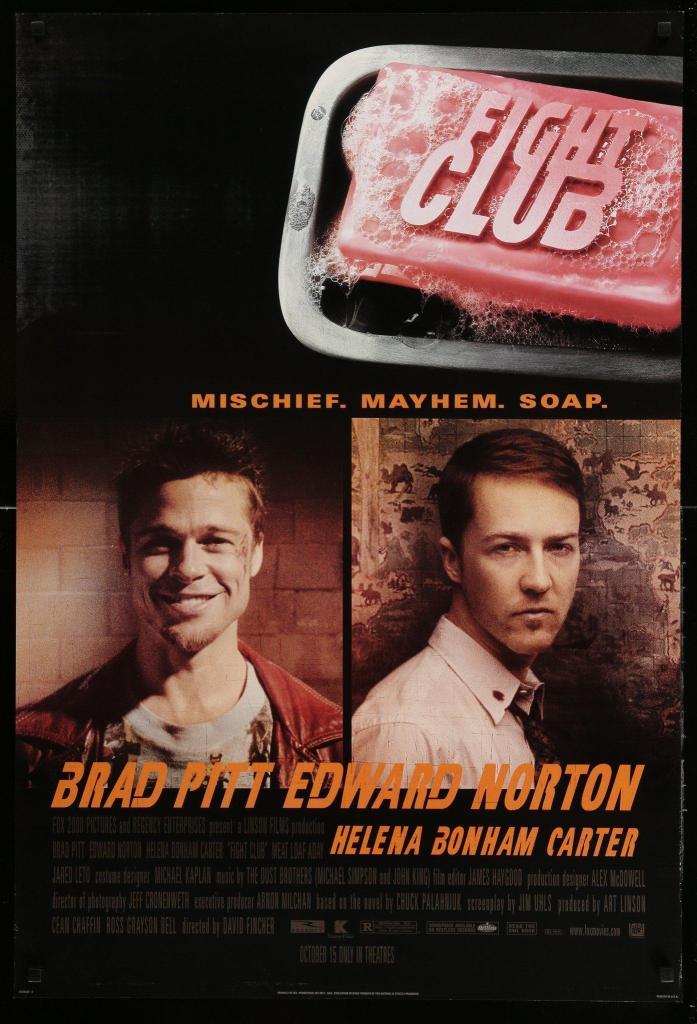
Cinematic theorists, T. Elsaesser, M. Hagener, posit the concept of cinema as brain. In their 2010 published work, “Film Theory: An Introduction through the Senses”, the authors articulate how the mind-game films alter how a viewer consumes the visual content as it presents unusual plot twist, an unexpected diverging narrative, or unsettling reveals, regarding the protagonist and their mental well-being. They state that, “Mind-game films implicate the spectator in ways that can no longer be accounted for by classical theories of identification, alignment and identification, because of the ‘default value’ or ‘degree zero’ of normal human interaction and perception are no longer in operation.” (Elsaesser, Hagener, p.155) David Fincher’s 1999 mind-game film phenomena, ‘Fight Club’ presents a narrative that provides its audience with a spectator reveal, changing the course of how they perceive the story as a whole. The audience is lead to believe that the unnamed protagonist, portrayed by Edward Norton, was taken on a life changing journey after he befriended Brad Pitt’s character, Tyler Durden. The protagonist abandoned his depressed life and became enthralled with Tyler Durden’s lifestyle and their co-established fight clubs. The mind-game aspect is revealed by the end of the narrative when Edward Norton discovers that Tyler Durden was a figment of his imagination and that all the crazy actions which his character disagreed with, turned out to be his actions all along. This reveal challenges the audience to re-watch the film again with a different understanding than their first viewing.
T. Elsaesser, M. Hagener, “Film Theory: An Introduction through the Senses”, 2010, p. 155
Thomas Elsaesser, “Mind Game Films” in W.Buckland, Puzzle Films in Contemporary Cinema. Wiley-Blackwell, 2009, p. 14
 Lauren's film analysis